
The Essential Rawdah Visiting Guide for a Spiritual Journey
Last Updated on September 7, 2026 by Mohammed Sifeddine
Table of Contents
The Essential Rawdah Visiting Guide for a Perfect Spiritual Journey
Rawdah Visiting Guide – just uttering these words fills a Muslim’s heart with a profound sense of anticipation and reverence. Visiting the Rawdah ash-Sharifah (the Noble Garden) in the Prophet’s Mosque in Medina is a dream for millions. But the process can seem daunting. How do you book? When can you go? What should you expect?
This comprehensive Rawdah Visiting Guide is designed to eliminate all confusion and transform your visit into the smooth, deeply spiritual experience you deserve. We’ve compiled the key information for visitors, with clear, step-by-step instructions and insider tips to ensure your journey is nothing short of unforgettable.
Read aslo on our website Discover All 85 Masjid Nabawi Gates & How to Navigate Them
1. What is the Rawdah and Why is it So Significant?
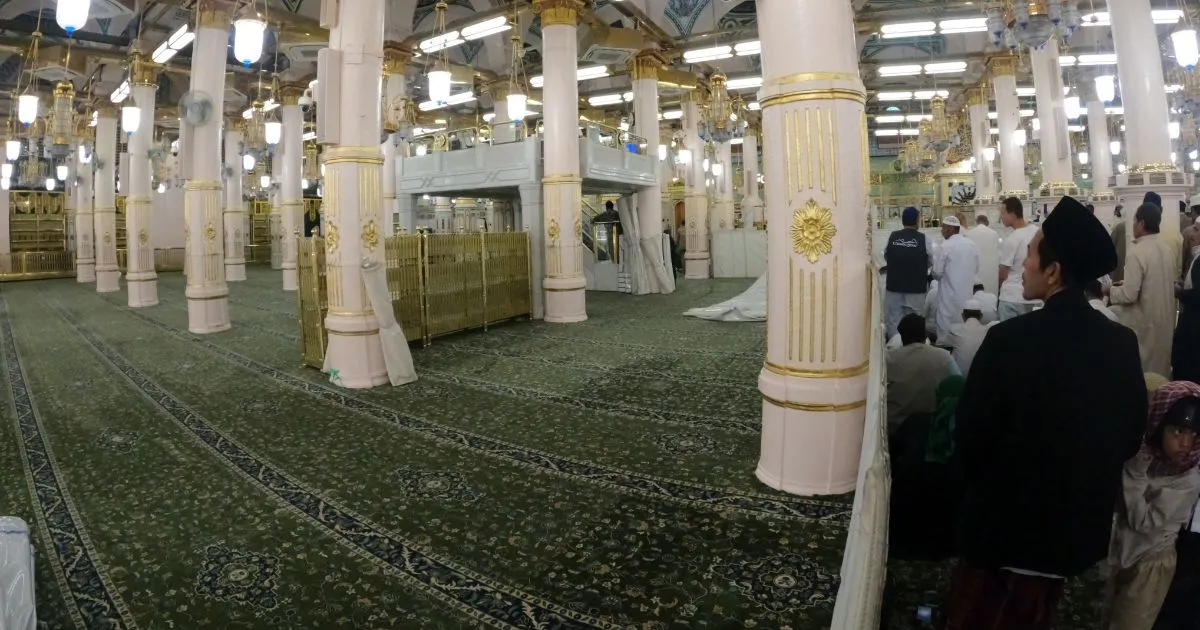
The Rawdah is not just a carpeted area; it is a piece of Jannah on Earth. Located in the Prophet’s Mosque (Masjid an-Nabawi), it is the area between the Sacred Chamber (the Prophet Muhammad’s (PBUH) resting place) and his Minbar (pulpit).
The Prophet (PBUH) himself said: “Between my house and my pulpit lies a garden from the gardens of Paradise.” (Sahih al-Bukhari). This Hadith is the core reason millions of pilgrims yearn to pray here. Understandably, due to its limited space and immense demand, a highly organized system is in place.
2. The Non-Negotiable First Step: Booking via the Nusuk App
Forget walking in spontaneously. Booking is mandatory and is managed entirely digitally to ensure order and fairness.
- The Official Platform: You must book your visit through the official Saudi government application, Nusuk (which replaced the older “Eatmarna” and nusuk apps).
- What You’ll Need: During the booking process, you will be required to enter the passport numbers or Saudi ID numbers for every individual in your party.
- The Booking Rush: New appointment slots are typically released every Friday at 2:00 PM Saudi Arabia Time. These slots are snapped up incredibly fast, often within minutes.
- Pro Tip: Log in to the app a few minutes before the release time, have all your passport details ready, and be prepared to click quickly. It is highly advised to book a week in advance, especially if you are visiting during peak seasons like Ramadan, Hajj season, or the cooler months of November and January.
Authoritative Resource: Download the official Nusuk App from the Apple App Store or Google Play Store.
Read also on our website the Zamzam Water Filling Station in Medina in Masjid Nabawi
3. Understanding Visiting Hours and Segregation
To manage the immense crowds and allow for peaceful worship for all, the Rawdah has specific visiting hours for men and women.
- Women’s Hours: Start immediately after the Fajr (dawn) prayer and continue until the Dhuhr (noon) prayer begins.
- Men’s Hours: Commence after the Dhuhr prayer and run through until the Isha (night) prayer.
- Women’s Hours (Evening): Resume after the Isha prayer and continue until approximately midnight.
Important Note: These times are subject to change based on prayer times and the discretion of the authorities. Always double-check your Nusuk app confirmation for your specific allocated time.
4. Finding Your Way: Entrance Gates and Parking
The Prophet’s Mosque is vast, and knowing where to go will save you precious time and stress.
- The Main Entrance: The primary entrance for Rawdah visitors is near Gate 37. If you are approaching from the eastern side, Gate 34 is also a common entry point.
- Closest Parking: The most convenient parking facility is Parking Area No. 1. From here, it’s a short and well-signposted walk to the designated gates.
Read also on our website about The Exhibition of Rare Manuscripts & Relics in Medina: A Hidden Treasury Under Masjid Nabawi
5. How to Prepare: Spiritual and Practical Readiness
A successful visit is about more than just logistics.
Spiritual Preparation:
- Make the intention (Niyyah) for your visit to seek the blessings of Allah in this sacred place.
- Perform ablution (Wudu) before you arrive.
- Prepare your Duas (supplications). This is a prime place for them to be accepted.
Practical Preparation:
- What to Wear: Dress in clean, modest Islamic attire. For men, it’s best in Ihram clothing if possible. Women must wear a full, loose-fitting abaya and hijab.
- What to Bring: Only bring absolute essentials—your phone (on silent), a small bottle of water, and perhaps a small pouch for your shoes. Large bags are a hindrance.
- Arrive Early: Arrive at least 30-45 minutes before your scheduled time to account for security checks and queues.
6. Your Step-by-Step Guide on the Day of Your Visit
Follow these steps for a seamless experience:
- Park in Area No. 1 and make your way towards Gate 37 or 34.
- Join the Designated Queue. There will be separate, well-managed lines for men and women.
- Present Your E-Ticket. Have the QR code from your Nusuk app booking ready on your phone for officials to scan.
- Security Check. You will pass through a security screening, similar to an airport.
- Shoe Storage. You will be directed to place your shoes in provided plastic bags. Keep them with you.
- Enter and Proceed. Follow the flow of the crowd. You will be guided through specific corridors leading to the Rawdah.
7. What to Do Inside the Rawdah: Prayers and Etiquette
Once you step onto the green carpet, time is precious. The staff may gently encourage a continuous flow.
- Offer Your Prayers: The most important act is to perform a prayer (Tahiyyatul Masjid and then your desired Nafl prayers). A two-rak’ah prayer is highly recommended.
- Send Salawat: Send abundant blessings upon the Prophet Muhammad (PBUH).
- Make Dua: This is a place where Duas are accepted. Ask Allah for everything you need in this life and the hereafter.
- Maintain Etiquette: Be respectful, peaceful, and avoid pushing or shoving. Do not raise your voice. Keep your visit focused on worship.
Trustworthy Source: For a deeper understanding of the recommended acts, you can refer to the detailed explanations on IslamQA, a renowned scholarly resource.
A Journey of a Lifetime Awaits
Visiting the Rawdah is a profound privilege. While the process requires planning and patience, the spiritual reward is immeasurable. By using this Rawdah Visiting Guide—from securing your Nusuk booking to understanding the etiquette—you are now equipped to navigate the practicalities with confidence.
Let your focus remain on the spiritual significance of standing in a “garden from the gardens of Paradise.” Prepare your heart, and may your visit be a source of immense blessings, peace, and a cherished memory for a lifetime.
Read also on our website About the detailed History and Architecture of Masjid Nabawi
Based on the text provided, here are the FAQs with questions as <h3> headings and answers in English:
Why is a permit required to visit the Rawda?
Permits are required to manage the large number of pilgrims and ensure a peaceful, orderly, and meaningful experience for all visitors. The system helps prevent overcrowding in this sacred area.
How can I obtain a Rawda permit?
The primary method is through the official Nusuk app. You need to create an account, navigate the permit reservation system within the app, select your desired date and time, provide the required personal information, and download the confirmed digital permit.
What is the best time to visit Rawda to avoid crowds?
During regular seasons, weekdays (especially Tuesday-Thursday) are less crowded than weekends. The optimal time for a less crowded experience is in the early morning hours, just after the Fajr prayer.
How should I plan my visit during peak seasons like Ramadan and Hajj?
A highly recommended strategy is a pre-Fajr visit, arriving early for a more serene experience. It is crucial to manage expectations as crowds will be significant. Consider alternative or shoulder seasons for easier permit access.
What are some advanced strategies for securing a permit in peak season?
Key strategies include: booking at least three days in advance (the three-day rule), securing your permit before you arrive in Madinah, and using multiple devices to access the booking system to increase your chances of success.
Is there help available for those who find the booking process difficult?
Yes. Assistance is available for elderly or tech-challenged visitors. This includes help from tour operators, service kiosks located near Masjid Nabawi, and staff at designated help desks within the mosque.
What should I expect and how should I behave during my visit?
Expect security checks where you must present your permit. Appropriate behavior includes maintaining reverence, dressing modestly, keeping your voice low, and avoiding disruptive actions. Photography and use of social media are not appropriate within the Rawda itself.
What can I do if I cannot get a Rawda permit?
You can still have a spiritually rewarding visit by focusing on other significant areas within Masjid Nabawi, such as the main prayer halls and historical sites. You can also try for walk-in access during less busy times like early mornings or late evenings.
What is the historical and spiritual significance of Rawda?
Rawda, meaning “garden,” is a sacred area within Masjid Nabawi between the Prophet’s pulpit and his burial chamber. It is considered a part of Paradise as mentioned in Islamic texts, making it a deeply significant site for prayer and spiritual blessings for Muslims worldwide.