
Uncovering the Forgotten Story of Bab Al-Barabikh
Last Updated on January 1, 2026 by Mohammed Sifeddine
Table of Contents
Uncovering the Forgotten Story of Bab Al-Barabikh
The Gate Time Forgot
Bab Al-Barabikh stands as a poignant symbol of the layers of history that even a city as well-documented as Al-Madinah can conceal. Unlike the grand, celebrated gates that dominate historical narratives, Bab Al-Barabikh was a humble, functional portal. Its story is not one of royal processions or monumental battles, but of daily life, ingenious urban engineering, and the quiet, inevitable passage of time that eventually erased it from both the landscape and the memory of many. This article pulls back the curtain on this forgotten entrance, offering a fascinating glimpse into the practical realities of a pre-modern Islamic city’s defense and infrastructure. Prepare to discover why this “simple arch of stone” deserves its place in the historical record.
What Was Bab Al-Barabikh?
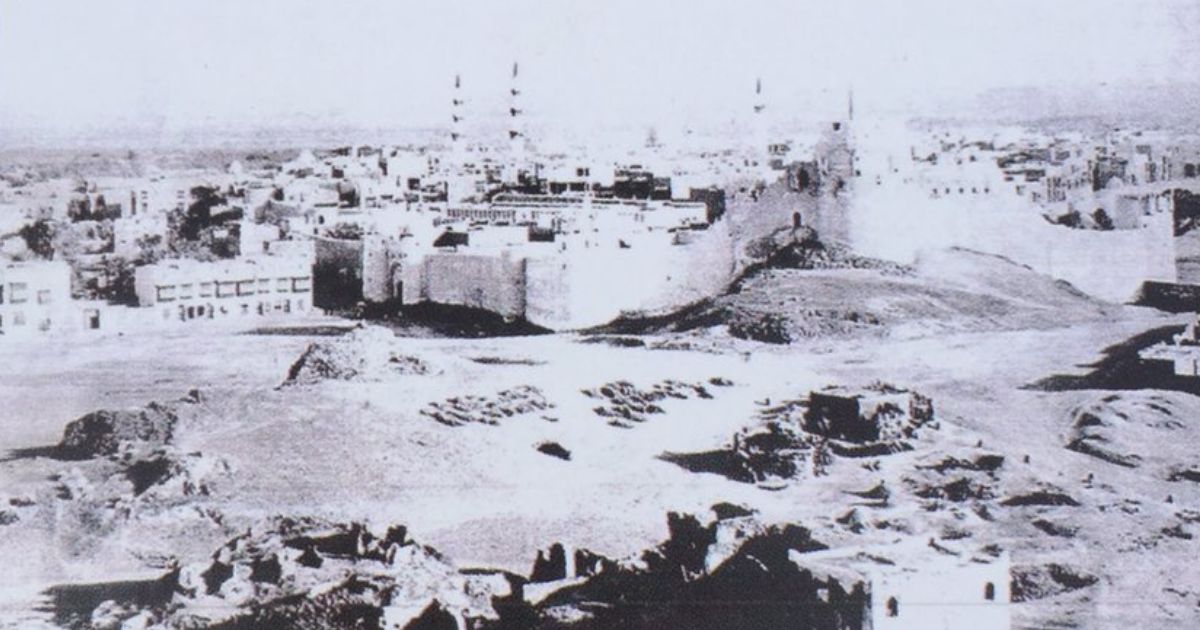
Bab Al-Barabikh was a secondary gate within the second expansive wall that once encircled Al-Madinah. Constructed after 1220 AH (approximately 1805 CE), this wall was built by the city’s inhabitants for protection. The gate itself was notably modest. Historical accounts, including those compiled in local histories, often omitted it, considering it an insignificant entrance compared to major gates like Bab Al-Majeedi or Bab Al-Sham. Its primary function was to provide controlled access to the western areas beyond the city wall, leading towards the region known as Ard Muhibbat, the Site of the Seven Mosques (Al-Masajid Al-Sab’a), and their surrounding neighborhoods.
The Etymology of “Barabikh”: More Than Just Drains
The name Bab Al-Barabikh is uniquely descriptive, directly tied to the city’s ancient sanitation technology. The term “Barabikh” (singular: Barbukh) refers to hollow, cylindrical terracotta pipes. These units were ingeniously designed with a protruding lip (a “positive” flange) and a receiving groove (a “negative” flange), allowing them to be seamlessly connected end-to-end. The joints were then sealed with clay or quicklime mortar (Noora), creating continuous underground conduits.
These Barabikh networks were the essential sewerage system of their time, channeling wastewater and rainwater from houses and public baths out of the city. This technology was widespread across the ancient and Islamic world.
Architectural Simplicity: A Gate Without Fortifications
The defining characteristic of Bab Al-Barabikh was its stark architectural simplicity. In an era where city gates were often formidable structures integrated into towers (Abraj) or castles (Qila), this gate stood apart. Contemporary descriptions state it was merely “a simple arch of stone resting on two stone pillars.” It had no defensive towers flanking it, no complex gatehouse, and no mechanisms for heavy fortification beyond a simple double-winged wooden door. This design clearly marks it as a utilitarian, secondary entrance meant for local traffic rather than a primary defensive bulwark.
The Vital Link: Al-Barabikh Bridge and Urban Hydrology
The gate cannot be understood in isolation. It was intrinsically linked to the nearby Jisr Al-Barabikh (Al-Barabikh Bridge), which spanned the canal of Wadi Sayl Abu Jaidah. This bridge was a marvel of functional design, constructed from successive, regular semi-circular stone arches. When viewed in profile, the repetition of these arches bore a striking visual resemblance to the connected Barabikh pipes, leading to the bridge sharing the same name.
The bridge served a critical dual purpose:
- Aqueduct: Its arches allowed the seasonal waters of the wadi (valley) to flow freely.
- Viaduct: The top of the bridge featured a stone walkway, providing a crucial pedestrian path to homes and buildings on the eastern bank of the canal.
A thick iron grille, functioning like a gate, could be controlled from the city side to allow water passage while restricting movement. This integration of gate, bridge, and water management showcases the holistic urban planning of historical Al-Madinah. For more on Islamic civil engineering, consider reading about the Muslim Heritage of innovation in water management.
Location and Urban Context: Mapping the Lost Gate
Pinpointing the location of Bab Al-Barabikh helps reconstruct a slice of the old city’s map:
- General Area: The western side of Al-Madinah, near the second wall.
- Proximity: It was situated directly opposite the first of three adjacent alleways collectively named Azqat Al-Barabikh (The Alleys of Al-Barabikh).
- Vicinity: These alleys were north of Hawsh Abu Shosha and connected to the Al-Hashimiyyah district to the west.
- Eastern Terminus: The bridge and gate area ended on the eastern side near Hawsh Al-Qashash and Hawsh Durrah, with the city wall running north along the wadi.
The gate faced elevated houses on the eastern bank, known as Buyut Al-Nouriyyah (like the homes of Al-Masri, Husni Al-Ali, and Hussein Taha), which had rear entrances to eastern alleys and western doors opening onto the bridge’s walkway.
The Guardian: The “Karkun” Police Post
Guardianship of Bab Al-Barabikh fell to a small police station known historically as the “Karkun.” This post was situated on a platform (Dakkah) adjacent to the gate’s very location. The Karkun was responsible for controlling the opening and closing of the gate according to the city’s curfew laws and security protocols, a common practice for all of Al-Madinah’s gates. This constant presence cemented the gate’s role as an official, monitored city portal, not just a casual archway.
Demise and Disappearance: The Fate of the Gate
The decline of Bab Al-Barabikh was gradual:
- Structural Decay: The stone arch collapsed “a long time ago,” well before the mid-20th century, leaving only the remnants of its stone pillars.
- Fading Memory: Its ruin was so complete that many Madinah residents of later generations had no memory of it ever being a functional gate. The site was perceived merely as a platform with a small room (the former Karkun).
- Final Erasure: The gate’s remaining fragments, along with the entire second wall and the Jisr Al-Barabikh, were ultimately demolished around 1370 AH (1950 CE) as part of a major urban expansion and modernization project by the Kingdom. This project removed the old walls to accommodate the growing city, as discussed in broader contexts of Saudi Arabia’s urban development in the 20th century.
Why Remembering Bab Al-Barabikh Matters
The story of Bab Al-Barabikh is more than an architectural footnote. It is a gateway to understanding the lived reality of historical Al-Madinah—a city of grand mosques and sacred sites, but also of practical bridges, efficient drainage, and guarded walls. It reminds us that history is built not only on monumental acts but also on the ingenuity of everyday infrastructure. While its stones have vanished, reconstructing its narrative preserves a piece of the city’s rich urban tapestry. Bab Al-Barabikh may be lost to the landscape, but through historical inquiry, it is found again, offering a humble yet profound connection to the Madinah of a bygone era.
Discover More about Madinah in our Blog Section
