
Bab al-Shami: Reviving a Lost Gateway to Madinah
Table of Contents
Bab al-Shami: Reviving a Lost Gateway to Madinah
The Gate That Witnessed History
Bab al-Shami stands as a profound symbol in the historical narrative of Madinah, a city revered by over a billion Muslims worldwide. While pilgrims today flow seamlessly into the illuminated expanses surrounding the Prophet’s Mosque, for centuries, entry was mediated through formidable gates within a protective wall. Among these, the Bab al-Shami, or “The Syrian Gate,” was paramount. Guarding the northern route towards Syria, it was not merely an entrance but a statement of power, piety, and architectural sophistication. This article delves deep into the riveting saga of the Bab al-Shami—from its robust construction and repeated royal renovations to its heartbreaking mid-20th century demolition and its enduring legacy in the urban memory of Madinah.
Architectural Grandeur of the Bab al-Shami
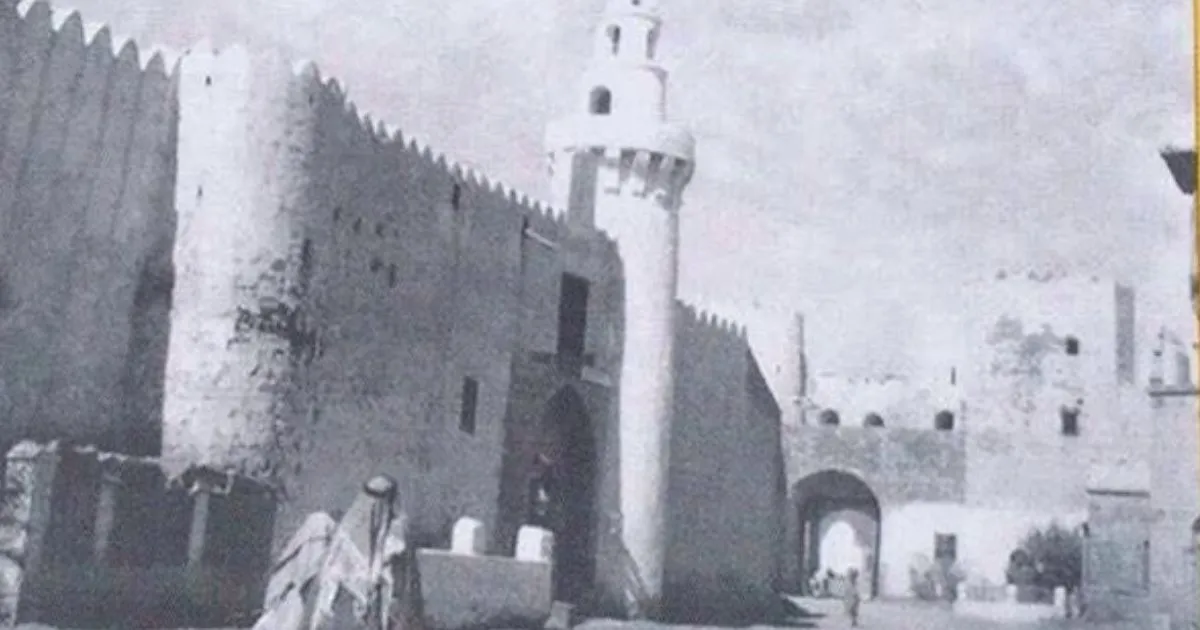
The Bab al-Shami was a masterpiece of defensive architecture, designed for both imposing presence and practical fortification. Its core structure was defined by two massive, circular towers that flanked the main entrance. These towers were expertly constructed from hewn stone, a costly and durable material reserved for the most significant structures, which was set upon deep, strong foundations.
The towers tapered elegantly as they rose, functioning as sturdy buttresses. Between them stretched the gate’s crowning feature: a monumental, semi-circular stone arch that soared over the main doorway. This grand vestibule, over four meters deep, formed a high, vaulted ceiling that served as an upper guard post. The main entrance itself was a rectangular opening capped with a lower, “broken” arch, all built from the same finely cut and joined stone, with gypsum and quicklime mortar sealing the seams.
- Tower Function: The twin towers housed garrison soldiers and guards. Accessed via small doors from within the gate’s passage, their roofs were used as patrol points, offering surveillance over the castle and the critical area between the Great and Small Shami Gates.
- External Finish: Historically, the Bab al-Shami displayed the raw, noble texture of its hewn stone. Later renovations saw it coated in a whitewashed plaster, giving it the brilliant appearance captured in later photographs.
A Timeline of Royal Patronage: Sultans and the Gate
The Bab al-Shami was not a static monument but a living part of the city’s fabric, repeatedly restored by Ottoman sultans as an act of religious duty and imperial patronage.
- 1667 CE (1078 AH): Sultan Mehmed IV financed a major renewal of Madinah’s walls and its primary gates, including the Bab al-Shami, after over 130 years of wear.
- 1748 CE (1162 AH): Sultan Abdul Hamid I included the gate in limited repairs to the existing wall.
- 1805 CE (1220 AH): A large-scale restoration ordered by Sultan Mahmud II and executed by Muhammad Ali Pasha, the Viceroy of Egypt, brought significant repairs to the Bab al-Shami. This included adding upper battlements, replacing doors, rebuilding the mud-brick upper sections of the damaged towers, and reinforcing the main stone arch.
- 1848-1860 CE (1265-1277 AH): Sultan Abdulmejid I renewed the Bab al-Shami without altering its fundamental form or structure.
- 1868 CE (1285 AH) & 1887 CE (1305 AH): Sultans Abdulaziz and Abdul Hamid II oversaw further, more limited repairs, with the latter’s work in the late 19th century being the final physical restoration the gate would ever receive.
The Demolition: Why Was Bab al-Shami Destroyed?
The fate of the Bab al-Shami is intertwined with the modernizing ambitions of the 20th century. The gate had already suffered damage during the “Citadel Revolt” of 1919 (1338 AH), which damaged its upper towers. However, the final blow came with a broader urban development project.
In 1950 (1370 AH), the Saudi government initiated a project to remove the entire historic wall and citadel of Madinah to accommodate the city’s rapidly expanding population and facilitate modern transportation. Despite its storied past and architectural value.
Modern Echoes: The Legacy of “Bab al-Shami” Today
Though the physical structure is gone, the Bab al-Shami refuses to be erased from Madinah’s identity. Its most powerful legacy is toponymic—the area where it once stood is still known today as “Hayy Bab al-Shami” (the Bab al-Shami Quarter). Property deeds and locations in the old city are historically referenced in relation to it: “inside Bab al-Shami” or “outside Bab al-Shami.” This enduring name is a testament to the gate’s deep-rooted significance in the city’s urban psyche. Advocacy often exists for municipal authorities to formally preserve this nomenclature in modern development plans for the central area.
A Note on Adjacent Gates: Historical accounts, like that of chronicler Ali ibn Musa, remind us that the Bab al-Shami complex included smaller, specialized gates. To its right, inside the citadel area, was the “Bab al-Habs” (Prison Gate), a small entry for women and prisoners, followed by the “Bab Dar al-Hukuma” (Government House Gate), the main entrance to the citadel facilities.
Rediscovery and Digital Revival
Today, the story of the Bab al-Shami is kept alive through:
- Historical Photography: Old images are crucial for understanding its scale and detail.
- Academic Research: Scholars piecing together its architectural evolution from texts.
- 3D Modeling & Virtual Reconstruction: Emerging technologies offer the most compelling hope for “revival.” Projects dedicated to digitally reconstructing lost Islamic heritage, like those explored by ArchNet, can potentially allow this lost gateway to be experienced by a new generation.
More Than Just Stone and Mortar
The journey of the Bab al-Shami is a microcosm of Islamic urban history: periods of majestic construction, diligent maintenance driven by faith, and the often-painful transitions of modernity. Its story pushes us to look beyond the present landscape of Madinah and envision the layered city that once was—a city of venerable walls, mighty gates, and a distinct sense of place. While the physical Bab al-Shami is lost, its name persists on the lips of residents, and its memory is now being resurrected through digital archaeology and historical inquiry. It serves as a powerful reminder that heritage is not merely about preserving what remains, but also about faithfully remembering what was, ensuring that the legacy of monuments like the Bab al-Shami continues to inform and inspire.
To explore more about the rich history of Madinah, consider reading our article on the Architectural Evolution of the Prophet’s Mosque
King Abdulaziz Foundation (Darah): A premier national research and archive center in Saudi Arabia, establishing trust for historical sources.