
Badr Sites Every History Seeker Must Visit
Table of Contents
Badr Sites Every History Seeker Must Visit
Battle of Badr sites are not just dots on a map; they are the very ground where faith was tested, destiny was decided, and the course of human history was irrevocably altered. For Muslims and students of history, visiting these locations is a profound journey into the heart of Islam’s defining moment. This guide isn’t just a list—it’s a portal. We’ll take you beyond the textbook and onto the sacred sands, exploring the exact Battle of Badr sites where the Prophet Muhammad (PBUH) consulted his companions, where angels descended, and where the early Muslims proved their mettle. Prepare to see Badr with fresh eyes.
Why These Battle of Badr Sites Matter Today
Visiting Battle of Badr sites is an exercise in connecting narrative to geography. It transforms stories of sacrifice and strategy from abstract concepts into tangible reality. Standing where the Muhajireen and Ansar pledged their lives makes their loyalty visceral. Seeing the battlefield’s scope makes the divine victory more astonishing. For the serious seeker, this pilgrimage builds an unparalleled connection to the foundational struggle of early Islam, offering lessons in leadership, trust in God, and unity that resonate powerfully in our modern era. Resources like the Wikipedia page on the Battle of Badr provide a solid factual base, but being there ignites the soul.
Site 1: The Council Ground at Wadi Dafiran (The Pledge of War)
This is where the critical decision was made. After the Muslim force left Medina and news reached them that the Quraysh army was advancing for battle, the Prophet (PBUH) halted here. He convened a shura (consultative council) with his companions. The moment was tense—the Muslims were outnumbered and under-equipped.
First, Abu Bakr (RA) and then ‘Umar (RA) spoke with resolve. Then, Al-Miqdad ibn ‘Amr (RA) delivered his famous words, declaring the Muslims’ readiness to follow the Prophet even to “Bark al-Ghimad,” a distant land. But the Prophet (PBUH) was seeking the counsel of the Ansar, who were only pledged to defend Medina. Sa’d ibn Mu’adh (RA), chief of the Aws tribe, rose and delivered the decisive pledge: “O Messenger of Allah! We have believed in you and affirmed you. So proceed as you wish, and we are with you. By He who sent you with the truth, if you were to lead us into the sea, we would plunge into it with you.”
This site marks the moment of unified commitment, transforming the expedition into a firm resolve for battle. It is the birthplace of the battle’s spiritual strategy.
Site 2: The Well of Dafiran
Located within Wadi Dafiran, this ancient well is a tangible link to the journey. While historical accounts don’t explicitly state the Prophet (PBUH) drank from it, it is part of the landscape his army traversed. Wells were critical logistical points in desert warfare, controlling water meant controlling the field.
The subsequent strategic move at Badr—to seize and control the wells—makes every water source on the approach conceptually important. Visiting the well grounds the visitor in the practical realities of the march: the thirst, the planning, and the reliance on such stations in the harsh terrain. It serves as a reminder of the mundane yet vital elements that underpinned the monumental spiritual event.
Site 3: The Burial Place of Sayyiduna ‘Ubaydah ibn al-Harith (RA)
A site of singular heroism and sacrifice. ‘Ubaydah ibn al-Harith (RA), a cousin of the Prophet (PBUH) and one of the earliest Muslims, was a key participant in the pre-battle duels. He faced and severely wounded Utbah ibn Rabi’ah, but was himself mortally wounded, losing his leg.
He was carried from the battlefield, and his wounds proved fatal at Wadi al-Safra’, near Dafiran. He was buried there, making his grave a standalone historical site connected to Badr but located on the return route. He is often counted as the fourteenth martyr of Badr. His grave is marked and serves as a powerful stop to reflect on the personal cost of the victory and the honor of being among the very first martyrs in Islam’s military history.
Site 4: The Badr Battlefield and Martyrs’ Cemetery
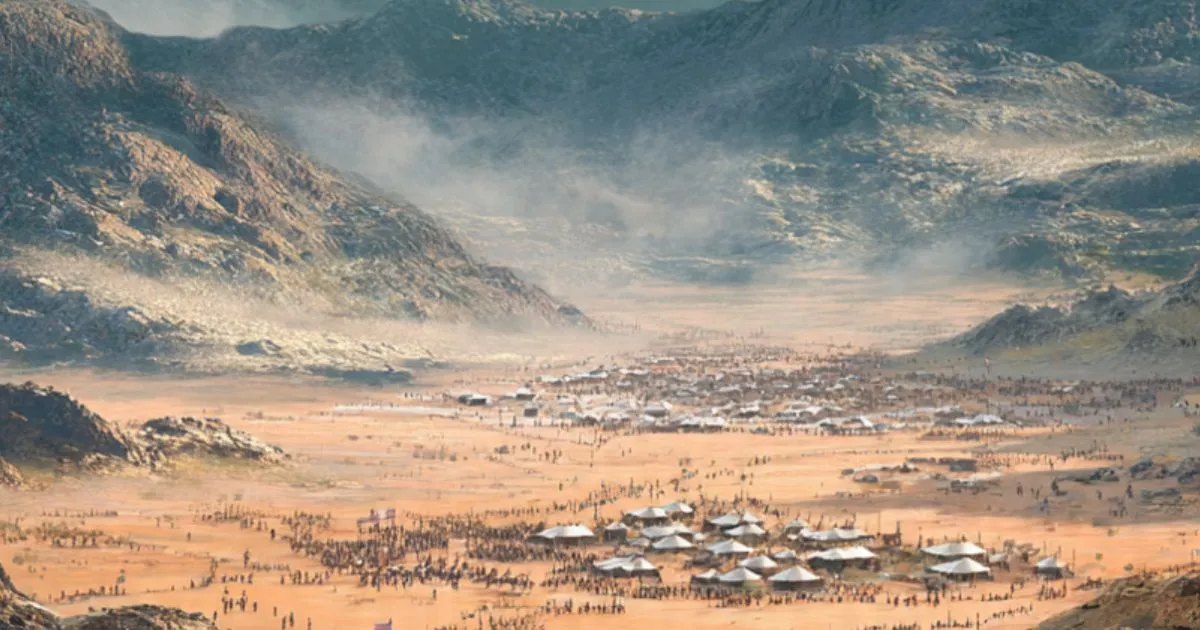
This is the heart of the visitation. The expansive plain is where the armies clashed on the 17th of Ramadan, 2 AH. Today, the area is marked by:
The Martyrs’ Cemetery (Maqbarat Shuhada’ Badr): A sacred enclosure holding the graves of 13 of the 14 Muslim martyrs. Their names are inscribed as a roll of honor:
- From the Muhajireen: ‘Umayr ibn Abi Waqqas, Safwan ibn Wahb, Dhu al-Shimalayn, ‘Aqil ibn al-Bukayr, and ‘Ubaydah ibn al-Harith (buried elsewhere).
- From the Ansar: Sa’d ibn Khaythama, Mubashir ibn ‘Abd al-Mundhir, Harithah ibn Suraqah, Rafi’ ibn al-Mu’alla, ‘Umayr ibn al-Humam, Yazid ibn al-Harith, Mu’awwidh ibn al-Harith, and ‘Awf ibn al-Harith.
Standing here, one overlooks the land where the “two parties” (Qur’an 8:36) met. Key landmarks fan out from this point: the lower ground (Al-‘Adwat al-Dunya) where the Muslim army first camped, the higher ground (Al-‘Adwat al-Quswa) where the Quraysh forces were positioned, and the location of the crucial well.
Site 5: The Command Post at Al-‘Arish Mosque
Strategy won the day. Upon the advice of the Companion Al-Hubab ibn al-Mundhir (RA), the Muslim army advanced from their initial position to seize the wells closest to the Quraysh. They filled in all but one, which they converted into a reservoir, securing their water supply.
The Prophet’s (PBUH) command post—a simple shaded structure or ‘arish—was established near this central well. The modern Al-‘Arish Mosque, a white building with two minarets, marks this estimated location. From here, the Prophet (PBUH) prayed, directed troops, and witnessed the battle. It symbolizes divinely-guided military wisdom, where a tactical suggestion from a companion was embraced and led to a pivotal advantage.
Site 6: The Strategic Hills: Al-‘Adwat al-Dunya & Al-Quswa
The topography dictated the battle’s flow. These two terms, meaning “the nearer side” and “the farther side,” are directly mentioned in the Qur’an (8:42).
- Al-‘Adwat al-Dunya: The lower ground near the Badr wells where the Muslim army ultimately positioned themselves after moving from their first camp at “Thaniyyat al-Wada’.”
- Al-‘Adwat al-Quswa: The higher, stony ground toward the direction of Mecca, where the larger and more arrogant Quraysh army descended and set camp, confident of an easy victory.
Viewing these two areas illustrates the clever use of terrain. The Muslims, though downstream, controlled the vital water source, forcing the Quraysh to fight at a disadvantage.
Site 7: Mount Jineen (Jabal al-Mala’ikah) & Thaniyyat al-Wada’
These sites represent the spiritual dimension of the battle.
Mount Jineen (The Mountain of the Angels): Tradition holds that this is the mountain where thousands of angels descended to aid the Muslim army, as mentioned in the Qur’an (8:9). It stands as a silent witness to the unseen divine support that reinforced the believers’ hearts. The climb, as many modern visitors experience, is challenging but rewarding, offering a panoramic view of the entire battlefield.
Thaniyyat al-Wada’ (The Pass of Farewell): This is believed to be the initial pass where the Muslim army first descended into the Badr basin and made their first camp. It marks the point of entry into the arena of destiny, the last “normal” ground before committing to the field of battle.
Modern Visit to Badr: A Practical Guide
A modern pilgrimage to these Battle of Badr sites is entirely possible. The town of Badr is located in the Al-Madinah Province of modern Saudi Arabia.
- Access: The sites are accessible by car from Medina (approximately 2-3 hours drive) or from the coastal road. A 4×4 vehicle is helpful but not always necessary for main sites.
- Guides: Hiring a knowledgeable local guide is highly recommended. They can pinpoint exact locations, share authentic narratives, and provide context that signs may not.
- Respect: These are historical and religious sites. Visitors should maintain a demeanor of respect, especially at the martyrs’ cemetery. Dress modestly.
- Planning: Start early, bring water and sun protection, and plan for a full day to visit the main sites without rush. The Saudi Commission for Tourism and National Heritage often provides resources and signage for historical sites.
Conclusion: Walking in the Footsteps of Giants
The Battle of Badr sites are a living classroom. From the council ground at Dafiran to the graves of the martyrs, each location layers understanding upon the story. It transforms the Battle of Badr from a magnificent historical event into a tangible geography of faith, strategy, and sacrifice.
To walk this land is to understand the weight of the pledge, the brilliance of the plan, the fury of the combat, and the sweetness of a victory that was, by all earthly measures, impossible. It is to walk in the footsteps of giants—the Prophet, his companions, and the angels themselves—and to carry forward the lessons of unwavering faith, strategic wisdom, and ultimate reliance on Allah.
Read More about Madinah in a Blog Section