
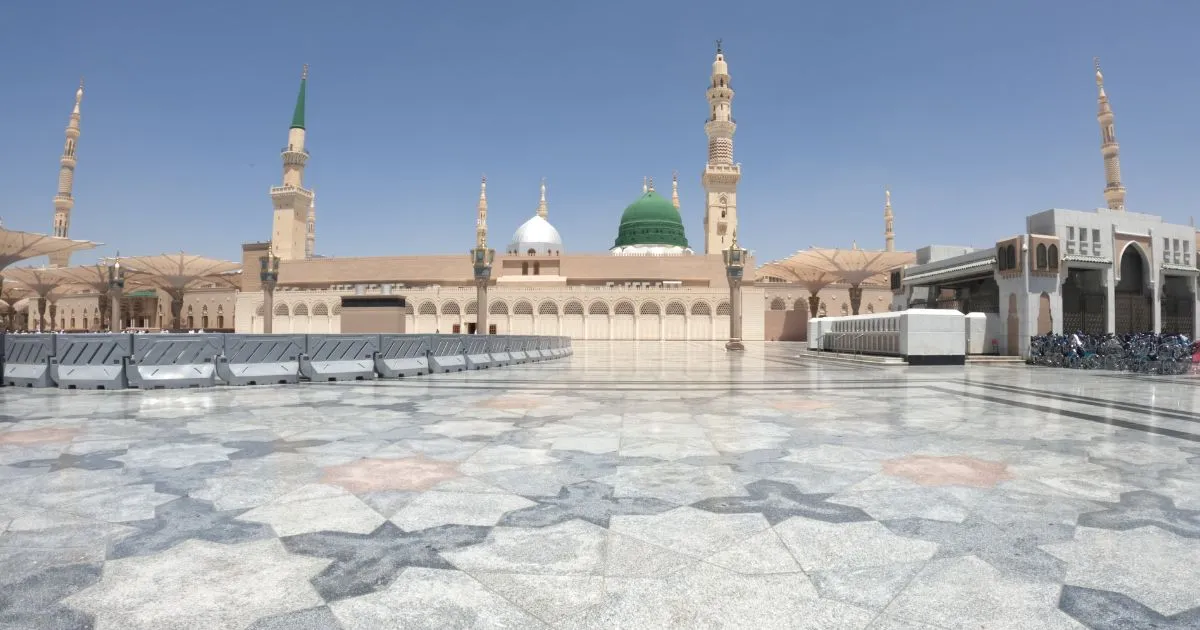
Longing For Madinah The Prophet’s City
Table of Contents
Unforgettable Devotion: The Powerful Truth Behind Longing For Madinah
If a city could be a compass for the heart, it would be Madinah. This is not mere poetic exaggeration but a spiritual reality experienced by millions across fourteen centuries. Longing for Madinah represents one of the most profound and enduring emotional states in the Islamic tradition—a deep, spiritual yearning that connects believers directly to the source of their faith. It is a force that has shaped history, inspired vast libraries of scholarship, and continues to define the inner lives of Muslims today.
This exploration moves beyond surface-level facts to uncover the rare and powerful dimensions of this longing. We will delve into its Prophetic origins, its miraculous reciprocation, and its transformation into a serious academic discipline. This is the story of how love for a place becomes an inseparable part of the faith itself.
The First Heart That Longed: The Prophet’s Bond with Madinah
The entire tradition of longing for Madinah finds its origin in the heart of the Prophet Muhammad (peace be upon him). His attachment was not incidental but foundational. His famous prayer, “O Allah, make us love Madinah as we love Makkah, or even more,” was a divine supplication that embedded this love into the spiritual DNA of his followers.
Historical accounts are replete with glimpses of this bond. Companions narrated that upon returning from travels, when the walls of Madinah came into sight, the Prophet would hasten his mount, driven by love and yearning. He gave the city names that evoke purity and goodness—Taybah and Taba. His physical presence, his footsteps on its paths, and his establishment of a community there transformed its very soil into a sacred trust. To love him is, by necessity, to cherish what he cherished. This primary, Prophetic love is the wellspring from which all subsequent longing flows, a theme extensively covered in foundational works like the Seerah of Ibn Ishaq.
A Reciprocal Love: When the City Loved Him Back
What elevates the narrative of longing for Madinah from one-sided affection to a profound spiritual dialogue is the undeniable theme of reciprocity. Islamic tradition powerfully asserts that the city, in its essence, loved him in return.
This is most vividly captured in two extraordinary narratives:
- The Mountain’s Affection: The Prophet said of Mount Uhud, “This is a mountain that loves us, and we love it.” Classical commentators, such as Ibn Hajar al-Asqalani in Fath al-Bari, explained this not as metaphor but as a metaphysical reality permissible within God’s power, referencing the Quranic principle of all creation’s inherent submission.
- The Yearning of the Palm Trunk: The most poignant symbol is the hannin al-jidh’—the yearning of the wooden pillar he used as a pulpit. When a minbar was built and the Prophet moved away, the trunk wept audibly until he comforted it. This event, documented in major hadith collections like those of Al-Bukhari, was used by early figures like Al-Hasan al-Basri as a spiritual lesson: “O people! A piece of wood yearns for the Messenger of Allah… so you have a stronger right to yearn for him!”
From Emotion to Scholarship: Chronicling the Sacred City
This powerful spiritual and emotional bond did not remain intangible. It catalyzed one of the most meticulous historical preservation projects in Islamic civilization. The longing for Madinah compelled scholars to become custodians of its every detail, transforming heartfelt devotion into rigorous academic enterprise.
They sought to preserve not just events, but the very map of sacred memory—the locations where the Prophet walked, the wells he drank from, the boundaries of his city. This was scholarship as an act of love, ensuring that future generations could connect with the physical reality of the Prophetic era. For a deeper understanding of early Islamic historiography, resources like the Encyclopedia of Islam provide valuable context.
The Five Foundational Histories of Madinah
In the late 2nd and early 3rd centuries after the Hijrah, this scholarly impulse crystallized in a remarkable, coordinated effort. Historians identify a group of five scholars from the same period who authored the first dedicated, book-length histories of the city, all under the identical title: Akhbar al-Madinah (The Chronicles of Madinah).
These “Five Books” represent the formal birth of Madinan history as a distinct field. The scholars were:
- Muhammad ibn al-Hasan ibn Zabalah
- Muhammad ibn Yahya ibn Abi Ghassan
- Al-Zubair ibn Bakkar
- Umar ibn Shabba al-Numayri
- Yahya ibn al-Hasan al-Aqili (who was also a governor of the city)
This simultaneous, focused effort by leading minds demonstrates how the longing for Madinah had evolved from personal sentiment into a collective intellectual mission, laying the cornerstone for all future study.
A Nuance in the Quran: The Honor of Entry
The depth of this connection is even reflected in nuanced scholarly interpretations of the Quran. In Chapter 17, verse 80, the believer is instructed to pray: “My Lord, cause me to enter a sound entrance and to exit a sound exit…”
The historical sequence saw the Prophet exit Makkah (the Hijrah) before entering Madinah. Yet, the verse mentions “entry” first. A body of classical exegetes noted that this linguistic order grants Madinah a subtle honor. They reasoned that Madinah is mentioned first because it was the place of reception, triumph, and the establishment of the Islamic state—the “sound entrance” where the message found its home and flourished. This textual nuance underscores Madinah’s theological status as the fulfillment of the Prophetic mission.
Adab al-Shawq: The Literary Genre of Yearning
This profound attachment eventually spawned its own literary genre: Adab al-Shawq wa al-Hanin (The Literature of Longing and Yearning). Scholars and poets channeled their devotion into works whose very titles were designed to evoke emotion and reverence.
Classic books from this tradition include:
- Al-Maghanim al-Mutabah fi Ma’alim Taybah (The Prize Treasures in the Landmarks of Taybah) by Al-Fairuzabadi.
- The monumental Wafa’ al-Wafa bi Akhbar Dar al-Mustafa (The Fulfillment of Fidelity in the Chronicles of the Abode of the Chosen One) by Al-Samhudi.
These titles are not merely descriptive; they are incantations of love, continuing the ancient Arabic poetic tradition of al-ghazal al-atlal (poetry weeping over abandoned homesteads) but redirecting that powerful longing toward the ultimate spiritual homeland: Madinah.
The Field Researcher: Al-Samhudi’s Sacred Methodology
Imam Nur al-Din al-Samhudi (d. 1506), author of Wafa’ al-Wafa, exemplifies the extreme dedication this genre inspired. His work is renowned not just for its compilation but for its original fieldwork.
Al-Samhudi was, in a very real sense, a pioneering field researcher. He personally traversed Madinah to measure and document its geography. For instance, he physically measured the distance from the Prophet’s Mosque to the Miqat mosque at Dhul-Hulaifah. This empirical, on-the-ground methodology—treating the sacred landscape as a site for scientific and historical verification—shows how longing for Madinah was expressed through painstaking, authentic documentation to preserve its truth for posterity.
Timeless Counsel: Imam Malik and the Neighbors of the Prophet
The virtue of Madinah also carried profound social and political implications, as illustrated in the counsel of its most famous jurist, Imam Malik ibn Anas. When the Abbasid Caliph Al-Mahdi asked for his advice, Imam Malik said:
“I advise you to fear Allah, and to be gentle with the people of this city, for the Prophet is their neighbor.”
This statement is a powerful legal and ethical cornerstone. It frames the residents of Madinah not merely as citizens but as perpetual neighbors of the Prophet, a status that confers a responsibility on any ruler to treat them with exceptional kindness and justice. It transforms the spiritual status of the city into a tangible principle of governance rooted in reverence.
The Unbroken Chain: Modern Echoes of Ancient Yearning
The longing for Madinah is not a relic of the past; it is a living, powerful force. Modern narratives continue to testify to its strength. Accounts tell of professionals in prestigious positions far from Madinah who, upon receiving a transfer order to return, left their posts without waiting a single day, so overpowering was their yearning to return.
Furthermore, contemporary scholars and orators explicitly frame their work as being inspired by this same longing, aiming to rekindle that “stirring of the hearts” in a new generation. This demonstrates that the bond is not static but a living tradition, continuously renewing itself while remaining true to its Prophetic origin.
The Everlasting Anchor of the Heart
Longing for Madinah is far more than tourism or historical interest. It is a complex, multi-layered reality—a spiritual state initiated by the Prophet, reciprocated by the sacred city itself, enshrined in scholarly tradition, and lived by believers every day. It connects the personal heart to the collective memory of the Ummah and to the physical space where faith was perfected.
From the weeping of a palm trunk to the measured footsteps of a historian, from a caliph’s counsel to a modern professional’s silent prayer, this longing remains an unbreakable thread. It is the heart’s compass, always pointing toward the illuminating light of Al-Madinah al-Munawwarah—the Enlightened City—and the timeless legacy of its most beloved inhabitant.
- Read More about Madinah in Our Blog Section