
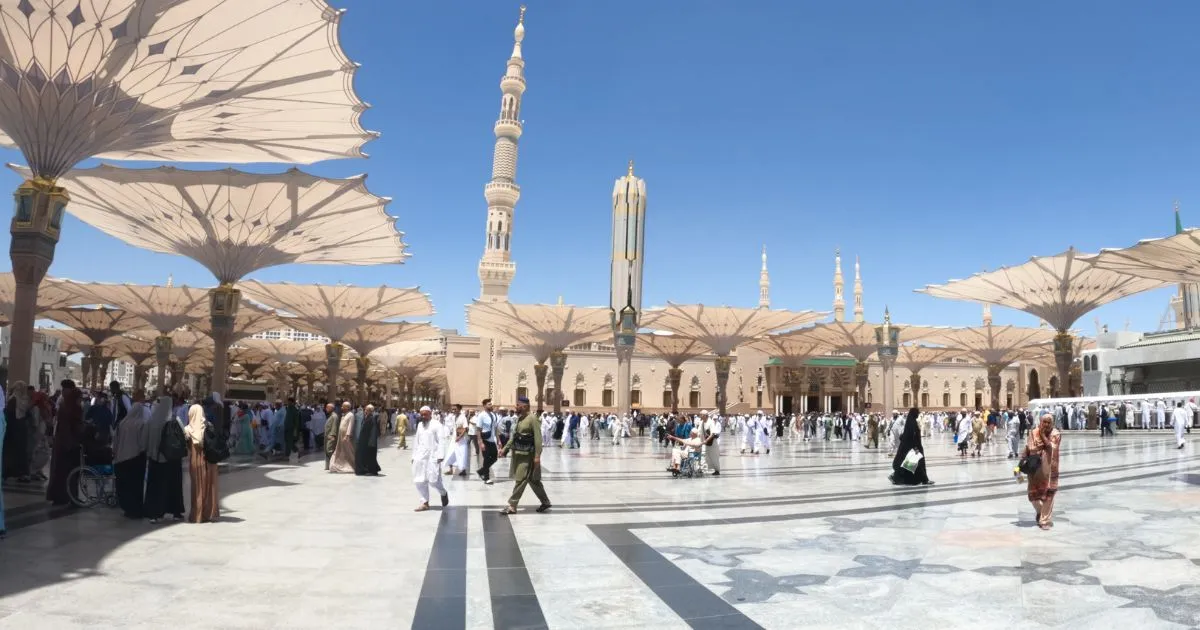
Discover All 85 Masjid Nabawi Gates & How to Navigate Them
Table of Contents
The Essential Guide: Discover All 85 Masjid Nabawi Gates & How to Navigate Them
1. Introduction: The Sacred Gateways of Masjid Nabawi
Masjid Nabawi gates are not merely entry points—they are profound symbols of Islamic architecture, spiritual welcome, and the mosque’s continuous expansion to accommodate the millions who visit the Prophet’s city each year. As the second holiest site in Islam, every element of Masjid Nabawi carries significance, and its gates are particularly important for both practical navigation and spiritual reflection.
For any pilgrim, visitor, or student of Islamic architecture, understanding the Masjid Nabawi gates system is essential. This comprehensive guide will serve as your complete reference, transforming complex information into practical knowledge you can use during your visit or study.
2. Architectural Masterpieces: The Design of Masjid Nabawi Gates
The Masjid Nabawi gates represent some of the finest examples of contemporary Islamic craftsmanship blended with traditional design principles. Each main gate is a masterpiece that deserves appreciation before you even step through it.
Key Design Features:
- Premium Materials: Crafted from rare Azizi wood in specialized workshops, then clad in bronze for durability and beauty
- Imposing Dimensions: Each major gate measures 3 meters wide × 6 meters high, creating a grand entrance befitting the mosque’s status
- Sacred Inscriptions: Every gate features the central declaration “Muhammad, the Messenger of Allah, peace be upon him” topped with the Quranic verse from Surah Al-Hijr (15:46): “Enter it in peace, secure”
- Precision Craftsmanship: The bronze cladding is executed with extraordinary precision, creating intricate patterns that reflect light beautifully during different times of day
According to architectural experts at the Islamic Arts Museum Malaysia, the gates represent a “successful fusion of traditional Islamic geometric principles with modern manufacturing techniques that will withstand centuries of use.”
3. The Complete Map: 42 Entrances & 85 Gates Explained
Understanding the Masjid Nabawi gates system requires knowing its organization. Official maps confirm the mosque has 42 main entrances, each of which may contain between 1 to 5 individual doors, totaling 85 doors after the latest expansions.
Quick Reference Table: Major Masjid Nabawi Gates
| Entrance # | Number of Doors | Name / Key Designation | Special Features |
|---|---|---|---|
| 1 | 1 | Gate of Peace (Bab as-Salam) | Main historical gate |
| 2 | 3 | Gate of As-Siddiq (Bab as-Siddiq) | Named after Abu Bakr as-Siddiq |
| 3 | 1 | Gate of Mercy (Bab ar-Rahma) | Historical significance |
| 5 | 1 | Separate Access Gate | Unique standalone entrance |
| 10 | 2 | Roof Access Gates | Lead to electric stairs |
| 21 | 5 | King Fahd bin Abdulaziz Entrance | Major landmark with 7 domes & 2 minarets |
| 40 | 1 | Gate of Gabriel (Bab Jibril) | Historical importance |
| 41 | 1 | Gate of Al-Baqi (Bab al-Baqi’) | Faces Al-Baqi’ Cemetery |
| 42 | 1 | Additional Northern Gate | Newer expansion access |
Source: Official documentation from the General Presidency for the Affairs of the Two Holy Mosques
4. Historical & Major Named Gates
Certain Masjid Nabawi gates carry special historical and spiritual significance that every visitor should recognize.
Bab as-Salam (Gate of Peace) – Entrance 1
The primary historical gate through which the Prophet Muhammad (PBUH) would often enter. Today, it remains one of the most significant entry points, especially for first-time visitors seeking spiritual connection.
Bab as-Siddiq (Gate of Abu Bakr) – Entrance 2
Named in honor of the first Caliph, Abu Bakr as-Siddiq (RA). This three-door entrance symbolizes his importance in Islamic history and his close companionship with the Prophet.
Bab ar-Rahma (Gate of Mercy) – Entrance 3
Associated with divine mercy and forgiveness, this gate holds particular spiritual significance for those seeking Allah’s pardon.
Bab Jibril (Gate of Gabriel) – Entrance 40
Historically significant as the gate through which the Angel Gabriel (Jibril) is said to have entered. It faces the original Qibla direction toward Jerusalem before it was changed to Makkah.
Bab al-Baqi’ – Entrance 41
Faces the historic Al-Baqi’ Cemetery where many companions of the Prophet and members of his family are buried. Visitors often use this gate when planning to visit the cemetery.
For more historical context about these gates, visit the comprehensive resource at Islamic Heritage Research Foundation.
5. Gates Designated for Women
Several Masjid Nabawi gates are specifically designated for women, providing direct access to women’s prayer areas and facilities. This thoughtful design ensures comfort, privacy, and ease of movement. Read in a Seprate Article About Women entrance at Masjid Nabawi To better Grasp The subject
Women-Only Entrances:
- Entrance 13 (5 doors)
- Entrance 17 (5 doors)
- Entrance 23 (1 door)
- Entrance 24 (1 door)
- Entrance 25 (5 doors)
- Entrance 28 (1 door)
- Entrance 29 (5 doors)
- Entrance 30 (1 door)
- Entrance 39 (1 door, labeled “Women’s Gate”)
These Masjid Nabawi gates for women are clearly marked in both Arabic and English, and lead directly to spacious, well-equipped women’s sections with separate ablution facilities.
6. Special Function Gates & Landmarks
King Fahd Entrance – Entrance 21
This is arguably the most visually striking among all Masjid Nabawi gates. Features include:
- Five consecutive doors
- Seven concrete domes above the entrance
- Two minarets flanking the structure
- Named in honor of King Fahd bin Abdulaziz, who commissioned the largest expansion of the mosque
Roof Access Gates – Entrance 10
These specialized Masjid Nabawi gates provide access to electric stairs leading to the mosque’s roof, which is particularly important during peak seasons when additional prayer space is needed.
Expansion Area Gates
Many of the newer Masjid Nabawi gates (particularly those with 3-5 doors) serve the massive expansion areas added in recent decades, ensuring smooth flow for the hundreds of thousands who pray there daily.
7. The Southern Portico: Funeral Gates Protocol
Added in 1995 (1415 AH), the Southern Portico serves a specific sacred function related to funeral prayers.
The Funeral Process Protocol:
- Entry: The deceased is brought through one of three external gates (East, West, or South) into the portico
- Preparation: The body is placed in a dedicated hall within the portico to await the funeral prayer
- Transfer to Main Mosque: For the Janazah prayer, the body is moved into the main prayer area through a special internal door
- Location: This internal door is situated in the wall of the old mosque building, to the right of the Ottoman Mihrab
This system ensures respect for the deceased while maintaining the sanctity and flow of regular prayers within the main mosque areas.
8. Masjid Nabawi Map Analysis: Facilities & Navigation
Official Masjid Nabawi maps reveal crucial visitor information that enhances understanding of the Masjid Nabawi gates system.
A. Prayer Area Numbering System
The map shows extensive numbering of prayer areas:
- Areas 201–236: Located in the newer expansion sections
- Areas 301–370: Cover major prayer halls, with special sequences (e.g., 345–351, 357–370) indicating important zones
- This numbering helps volunteers and staff direct worshippers efficiently
B. Essential Facilities at Gates
According to map markings, visitors will find:
| Facility Type | Symbol | Locations Relative to Gates |
|---|---|---|
| Restrooms (W.C.) | W.C. | Clustered near Gates 1-3, 12-20, 31-42 |
| Parking Areas | P | Concentrated near Gates 31-38 (West side) |
| Information Kiosks | Marked | At major gates: 1, 21, 40 |
| Multilingual Map Stands | Labeled | Near Gates 5, 10, 21, 30 |
| Elevators | Marked | Adjacent to Gates 10, 21, 25 |
C. Gate Clustering & Regional Access
Analysis of gate positioning reveals logical grouping:
North Side Cluster (Gates 1-3, 39-42):
- Historical gates with direct access to the old mosque section
- Closest to the Rawdah (Prophet’s Tomb area)
- Heavy W.C. facilities nearby
East Side Cluster (Gates 4-11):
- Mixed access points including women’s gates and roof access
- Connects to Islamic University and library areas
South Side Expansion Cluster (Gates 12-30):
- Serves the massive King Fahd expansion area
- Includes the grand King Fahd Entrance (Gate 21)
- Multiple parking access points
West Side Cluster (Gates 31-38):
- Primary parking and transportation access
- Direct links to major hotels and visitor services
9. Practical Visitor Guide & Navigation Tips
Using the Map System Effectively:
- Locate Your Gate Number First: When arriving, identify your gate number (posted in Arabic and English)
- Use Prayer Area Numbers: If meeting others, specify both gate AND prayer area number (e.g., “Gate 21, Area 312”)
- Facility Planning: Note that restrooms are most abundant near Gates 12-20 and 31-38
For First-Time Visitors:
- Start at Bab as-Salam (Gate 1): Begin your visit at this historical gate for spiritual significance
- Use Gate 21 as a Landmark: The King Fahd Entrance is easily recognizable and makes an excellent meeting point
- Download Official Maps: Use the Masjid Nabawi official app which includes interactive gate maps with real-time crowding information
For Peak Season Visitors (Ramadan & Hajj):
- Enter through West Side Gates (31-38): Typically less crowded with better parking
- Women should use designated gates 23, 24, 28, or 30 for fastest access
- Roof access via Gate 10 provides additional prayer space during crowded times
- Avoid Gates 1-3 during peak hours due to Rawdah visitor congestion
Accessibility Information:
- Gates 10, 21, and 31 have dedicated wheelchair ramps and electric cart services
- Elevators are marked on maps near Gates 10, 21, 25, and 35
- Special assistance can be requested at information kiosks near major gates
Parking Strategy:
- Long-term parking: Use P areas near Gates 31-38
- Quick access parking: Available near Gates 5 and 12
- Bus drop-off: Designated areas near Gates 21 and 40
Photography Guidelines:
While photography of the Masjid Nabawi gates is generally permitted, always:
- Avoid prayer times
- Be respectful of worshippers
- Follow any instructions from security personnel
- The best photographic angles are from the courtyards facing Gates 1, 21, and 40
For current visiting regulations and prayer times, check the official General Presidency for the Affairs of the Two Holy Mosques website.
10. Conclusion: Gates as Symbols of Welcome
The Masjid Nabawi gates system, with its 85 doors across 42 entrances, represents much more than architectural statistics. Each gate tells a story—of historical significance, of consideration for different worshippers’ needs, of the mosque’s growth, and of the endless welcome extended to all who come to pray, reflect, and seek peace.
From the historically significant Bab as-Salam to the functionally specialized funeral gates, and from the women-designated entrances to the grand King Fahd Entrance, every element of the Masjid Nabawi gates serves both practical and spiritual purposes.
The detailed mapping of facilities—from the numerous W.C. stations to the multilingual information kiosks—demonstrates thoughtful planning for the millions of annual visitors. Whether you’re a first-time pilgrim or a frequent visitor, understanding this gate system will significantly enhance your experience at Islam’s second holiest site.
As you plan your visit or continue your study of Islamic architecture, remember that these gates are designed not just as entries, but as transitions from the worldly to the spiritual, each marked with the name of Allah’s Messenger and an invitation to enter in peace and security.
Additional Resources & Internal Links:
External Resources (DoFollow Links):
- General Presidency for the Affairs of the Two Holy Mosques – Official authority