
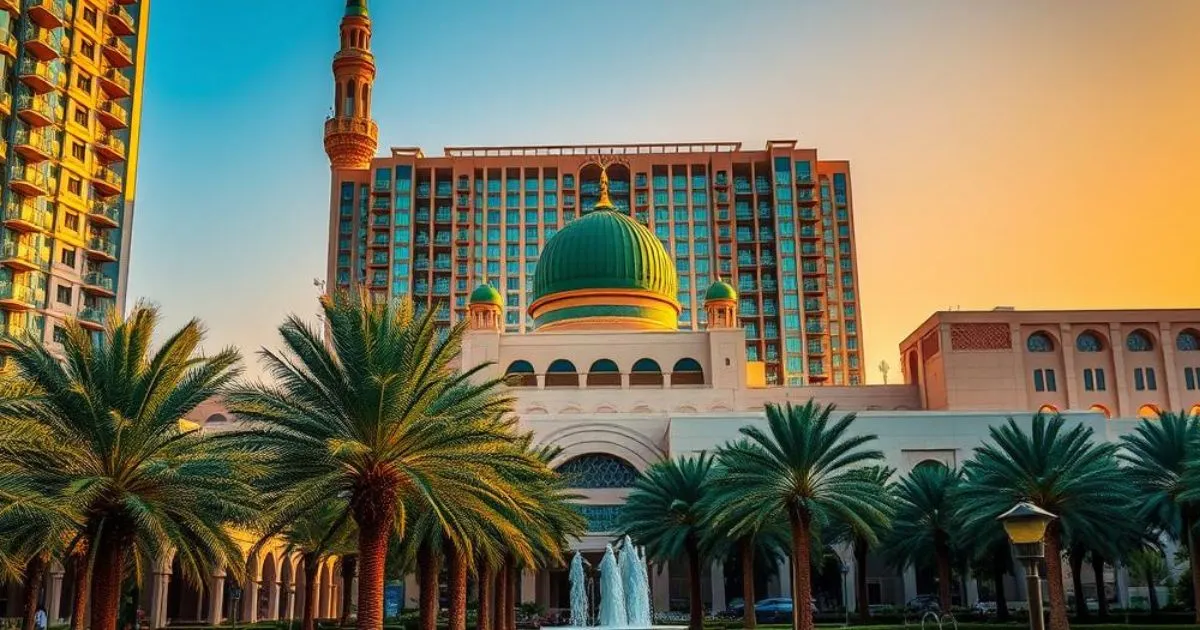
Can Expats or Non Saudis Buy Property in Madinah? Real Estate Laws Explained
Table of Contents
Can Expats Buy Property in Madinah? Real Estate Laws Explained
Saudi Arabia has introduced updated regulations allowing foreigners to own real estate, but with key restrictions in Makkah and Madinah
In a major shift for Saudi Arabia’s real estate market, the government has approved new rules permitting expatriates to buy property—with special conditions for the holy cities of Makkah and Madinah.
Can Expats Own Property in Madinah?
Yes, but with stricter regulations compared to other Saudi cities. Under the newly approved system, non-Saudis can purchase real estate in Riyadh and Jeddah with fewer restrictions, while ownership in Madinah and Makkah will be subject to additional controls.
Saudi Minister of Municipal, Rural Affairs, and Housing Majid Al-Hogail confirmed that the policy ensures a balance between foreign investment and protecting local interests, particularly in religiously significant areas.
Key Rules for Expats Buying Property in Saudi Arabia
- Geographic Restrictions
- Allowed with conditions: Madinah & Makkah
- Open for ownership: Riyadh, Jeddah, and other major cities
- The General Real Estate Authority will define specific zones where foreigners can buy.
- Implementation Timeline
- The law takes effect in January 2026.
- Full details will be announced within 180 days via the Istitlaa platform.
- Alignment with Other Laws
- The new rules work alongside the Premium Residency program and GCC ownership laws.
- Non-Saudis can own property for residence or investment.
Why Is This a Big Deal?
- Boosts foreign investment: Expected to attract billions in real estate deals.
- Increases housing supply: More projects likely in Riyadh, Jeddah, and NEOM.
- Strict controls in holy cities: Makkah & Madinah will have safeguards to prevent market disruptions.
Expert Opinions
Ahmed Al-Faqeeh, a Saudi real estate analyst, says:
“This will bring global developers into the market, but Madinah and Makkah will remain highly regulated to preserve their cultural and religious significance.”
Mohammed Al-Maymoni, a financial advisor, adds:
“Banks will expand mortgage options, and expats will have more choices—just not complete freedom in the Two Holy Mosques’ cities.”
Bottom Line
Expats can buy property in Madinah, but with tighter rules than in other Saudi cities. The full guidelines will be clear by mid-2026, shaping a new era for Saudi real estate.
Details of the Law
The executive regulations of the system will be introduced within 180 days of its publication in the official gazette through the Istitlaa platform. These will include details on procedures, legal, economic, and social requirements related to non-Saudi ownership of real estate, in preparation for its enforcement in January 2026.
The new system aligns with the provisions of the Premium Residency program, regulations governing GCC citizens’ ownership of real estate for housing or investment purposes, and existing laws granting non-Saudis privileges to own property and acquire other property rights.
Implementation of the New Ownership System for Non-Saudis
The Saudi Real Estate General Authority (REGA) has announced the entry into force of the system regulating non-Saudi ownership of real estate, with its provisions now being applied as part of the Kingdom’s regulatory legislation for the real estate market.
The Authority clarified that applications for non-Saudi ownership are received through the official digital portal, “Saudi Real Estate” (عقارات السعودية). The service is available to both residents and non-residents of the Kingdom, as well as to non-Saudi companies and entities, in accordance with specific regulatory controls and procedures.
The application process varies according to the applicant’s category:
- Residents within the Kingdom: Can apply directly through the portal using their residency number (Iqama). The system will automatically verify compliance with regulatory requirements, and procedures can be completed electronically.
- Non-Residents: Must begin the process through Saudi embassies and consulates abroad to obtain a digital identity, as a prerequisite for completing the ownership application via the portal.
- Non-Saudi Companies/Entities without a presence in the Kingdom: Must first register with the Ministry of Investment via the “Invest in Saudi Arabia” platform and obtain a Unified Number (700), before proceeding to complete the ownership application electronically.
The Authority confirmed that the system allows non-Saudi individuals, companies, and entities to own property in various regions across the Kingdom. Ownership in the cities of Riyadh and Jeddah, as well as in the holy cities of Makkah and Madinah, is governed by a clear regulatory framework based on the forthcoming Geographical Domains Document, which is set to be announced in the first quarter of 2026. Notably, ownership within the Two Holy Cities is restricted to Saudi companies and Muslim individuals, both from within and outside the Kingdom.
System Launch and Key Regulations for Non-Saudi Ownership
The Real Estate General Authority (REGA) has announced the official launch of the system for non-Saudi ownership of real estate, which came into effect this Thursday. The system introduces a regulatory framework based on a Geographical Domains Document, with a critical provision restricting ownership within the Two Holy Cities exclusively to Saudi companies and Muslim individuals, both from within and outside the Kingdom.
Official Announcement and Pending Details
Taysir Al-Mufrej, the official spokesperson for REGA, clarified that the specific locations and geographical domains included in the “Geographical Domains for Ownership Document” will be unveiled in the first quarter of this year. He further indicated that detailed information regarding the specific residential or commercial projects eligible for non-Saudi ownership has not yet been announced.
Scope and Content of the Geographical Domains Document
According to REGA’s official website, the Geographical Domains Document is established by a Council of Ministers decision. It comprehensively outlines the domains for non-Saudi ownership in major cities such as Riyadh, Jeddah, Makkah Al-Mukarramah, and Al-Madinah Al-Munawwarah, as well as across all cities and governorates of the Kingdom. The document will include detailed maps pinpointing specific locations, along with critical data on:
- Permissible ownership percentages.
- Types of real rights that can be acquired.
- Allowed durations of ownership.
- All regulatory controls governing non-Saudi property ownership and the acquisition of in rem (property) rights.