
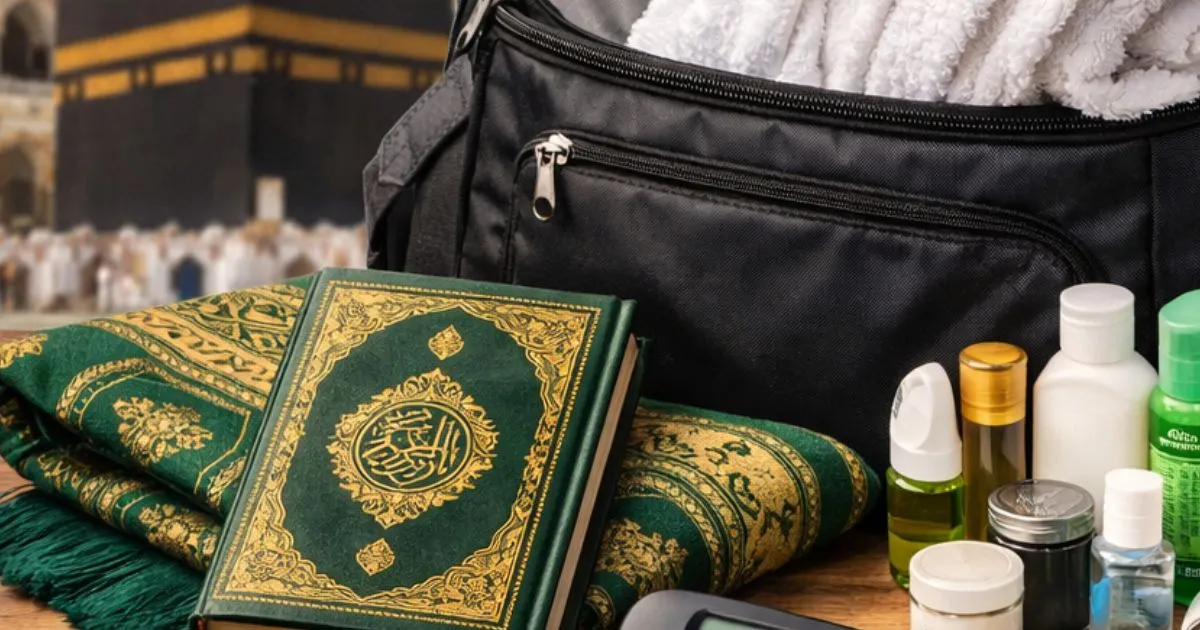
The Ultimate Umrah Bag Preparation: 7 Genius Steps to a Stress-Free, Spiritually Focused Journey
Table of Contents
More Than Just a Checklist
Umrah bag preparation is often reduced to a simple list of items to check off. But what if we viewed it as the very first spiritual act of your journey? This guide reframes packing not as a mundane task, but as a deliberate process of emptying your mind of distractions to create space for pure devotion. Every item you choose, from the type of Ihram fabric to a humble shoe bag, serves a higher purpose: to solve a potential problem before it arises.
When you solve these logistical problems in advance, your mind finds rest. A rested mind can focus entirely on the profound experience ahead. Think of your Umrah bag preparation as crafting a carefully designed toolbox—one that enables the highest degrees of personal serenity and allows you to be fully present in every moment of your worship.
Rule #1: Know Your Baggage Allowance (The Strategic Foundation)
Before you pack a single sock, understand the rules of the game. Airlines like Saudi Airlines and EgyptAir typically allow two checked bags at 23kg each, or one bag at 30kg. However, the most critical warning is this: always, always review your ticket details carefully.
Many fall into the trap of cheaper “Economy Light” fares, which often include no checked baggage whatsoever. This makes your strategic packing plan not just helpful, but essential. Confirming your allowance is the non-negotiable first step in any effective Umrah bag preparation.
The Three-Layer Packing System: Your Plan for Every Scenario
Adopt a strategic three-layer system for your luggage. This method, trusted by seasoned travelers, ensures you’re prepared for any travel hiccup.
- Layer 1: The Large Checked Suitcase. This holds the bulk of your clothing and items you won’t need immediately. Opt for a durable, hard-shell or sturdy fabric suitcase. The crucial tip? Ensure it has four wheels. Navigating a massive airport with a two-wheeled “pull” bag drains energy you should conserve for Tawaf and Sa’i.
- Layer 2: The Critical Cabin Bag (7kg). This is your emergency plan or “lifeboat” bag. It must contain all vital items in case your checked luggage is delayed. Pack your documents, phone, a full change of clothes, and—crucially for men—your Ihram, especially if you will be entering Miqat while still on the plane.
- Layer 3: The Personal Item. This small bag under the seat is for items you need every second: your personal Quran, reading glasses, power bank, and snacks. This organization alone creates psychological comfort, knowing everything has its rightful place.
The Non-Negotiable Essentials: Documents, Money, Electronics
Beyond clothes, these categories form the backbone of a smooth journey.
- Documents & Money: Have both physical and digital copies of everything: passport, visa, flight tickets, and hotel reservations. A practical tip from frequent travelers: prepare a small amount of Saudi Riyals in change before you leave. This saves hassle upon arrival for transport or buying water.
- Electronics: A few smart tips can prevent big headaches.
- Plug Adapter: Saudi Arabia uses Type G outlets. Get a reliable adapter like those from CE Manufacturing to ensure your devices can charge.
- Multi-Port Charger: Hotel rooms often have limited outlets. A multi-port charger is a genius solution for charging multiple devices at once.
- Power Bank: This is arguably the most important piece in your tech arsenal for long days outside the hotel.
- Portable Luggage Scale: This is the secret weapon for the savvy pilgrim. It may seem like a luxury, but it’s an investment in peace of mind and savings. On your return, bags are heavier with gifts and Zamzam water. This simple tool lets you weigh and redistribute items in your hotel room, avoiding unexpected excess baggage fees at the airport.
Your Mobile Pharmacy: Proactive Health for Uninterrupted Worship
This kit is not optional. Illness is the biggest disruptor of worship.
- For chronic conditions, bring more than enough medication, plus a few days’ extra supply.
- Basics for anyone include pain/fever relievers, anti-diarrheal medicine, and Vitamin C for immunity, as large gatherings can expose you to colds.
- A crucial, often overlooked tip: Pack anti-chafing cream or medical-grade petroleum jelly (like Sudocrem). The physical discomfort from walking during Tawaf and Sa’i, combined with sweat, can cause severe irritation that shatters your focus. Preventing physical pain is a form of spiritual preparation—you maintain your body to ensure it doesn’t distract you from devotion.
Read in our website also about Hospitals in Makkah and Madina Saudi Arabia Where You Can Seek Care in Hajj or Umra
Spiritual & Practical Clothing: From Ihram Fabrics to Supportive Shoes
Your clothing is your first line of defense for comfort and concentration.
- For Men – The Ihram:
- Pack two sets. Always have a spare in case one gets wet or dirty.
- Fabric is key. While many prefer pure cotton, experts strongly recommend blended fabrics like micro-fiber. Why? Cotton absorbs sweat but retains moisture, leaving the garment heavy and damp. Micro-fiber wicks moisture away, keeping the Ihram lighter and drier, which makes an incredible difference in comfort.
- The Ihram Belt: This genius tool solves two problems at once. It secures the Izar, giving confidence in movement, and has internal pockets to securely hold your phone and money close to your body.
- For Women – Modesty Meets Comfort:
- The balance is between modesty and practicality. Recommendations include loose, non-iron abayas and cotton scarves that stay in place.
- The golden tip: Wear a loose cotton trouser under the abaya. This provides an extra layer of modesty during movement and, most importantly, prevents chafing between the thighs during long walks, directly applying the “proactive care” philosophy.
- Footwear for Everyone: Experts strongly recommend supremely comfortable walking shoes for women, like those from Skechers. The physical demand is immense—kilometers of walking and standing on marble. A good athletic shoe provides support and shock absorption that no sandal can, enabling you to complete strenuous rituals with less pain and more focus.
Read in our website also about The Ultimate 7-Point Guide to Choosing the Best Footwear for Hajj and Umrah
The Ihram Toolkit & The “Imani Bag”: Nourishing Your Soul
Divide your toiletries intelligently based on the state of Ihram.
- The Ihram Toolkit: A separate small bag containing items completely free of fragrance: unscented soap, oil, deodorant (labeled “unscented”), and baby shampoo. This eliminates the constant mental check of “Does this have perfume?” and becomes a physical reminder of your sacred state.
- The “Imani Bag” (Spiritual Nourishment Bag):
- Your Personal Mushaf: A Quran whose pages you’re familiar with creates a deep connection.
- A Book of Adhkar: Like Hisn al-Muslim.
- A Dua List: Take a notepad and pen. Write down the names of everyone who asked for your prayers. Carrying these “amanat” (trusts) adds profound depth to your supplications.
- Light Snacks: Energy bars or nuts, but don’t overpack—everything is available there.
The Final Masterstroke: The Simple Tool for Maximum Mental Clarity
This may be the smartest idea in the entire guide: the shoe bag.
The classic problem in the Haram is what to do with your shoes. Leaving them on shelves risks loss, and carrying them occupies a hand and your focus. The solution? A simple drawstring cloth bag.
Put your shoes in the bag, sling it on your back, and forget about it. The result? Both hands are free, and, more importantly, your mind is free. This addresses the core concept of cognitive load. Every small worry, like “Where are my shoes?” consumes mental bandwidth. That bandwidth should be 100% dedicated to Khushu’ (devotion). This cloth bag is a simple, physical tool you use to purchase that precious mental real estate.
The Sacred Act of Preparation
Ultimately, this method of Umrah bag preparation is an act of worship in itself—a training in planning and trust in Allah. Every decision, from fabric choice to dua lists, has the ultimate goal of preparing the heart, body, and mind for a profound spiritual experience.
These worldly details are not separate from the spiritual goal; they are the bridge that gets us there. The aim of all this planning is to liberate the mind from the prison of worry and distraction. When you are secure in the knowledge that all your needs are covered, only then can you fully open your heart to the moment you are in—standing in the Haram, focused solely on your connection to the Divine.
We end with a reverse question, one for personal reflection: If we are carefully packing our bags, what do we need to unpack from our hearts and minds before a journey like this? Clearing that internal space is the truest preparation of all.
What are the two items that must be in a separate bag and not checked in?
The two items are your Ihram clothing (if you are a man) and your sandals. They must be in a separate carry-on bag because you will need them after airport procedures. The sandals should be ordinary ones, not Crocs and not dress sandals; your heel must be exposed while in Ihram.
What three items should be in a bag close at hand?
You should have your passport, a SIM card pin/paperclip, and a pen. You will need the SIM card pin as soon as you arrive in the destination country, and the pen is for filling out forms at the airport.
What should first-time travelers or beginners take for ear discomfort?
Take earplugs, as some people experience slight ear-popping or discomfort due to the air pressure changes during takeoff and landing. It is usually a mild issue.
What items are good companions for the flight?
Prayer beads (misbaha) and a small Quran are good companions to have during the flight.
What is a very important tip regarding money when traveling?
You must take some cash in your home country’s currency. Many people discover when trying to get home that they don’t have any money in their local currency. Also, distribute your Riyals among your bags in a small pouch that is easily accessible and kept away from food and drink to avoid spills.
What items should you NOT take in your carry-on luggage?
Do not take scissors or knives with you; buy them in the destination country. If airport security finds them during screening, they will confiscate them. Also, deodorant should not be in spray (aerosol) form, as sprays are not allowed on the plane.
What should you consider for the bag you take inside the Haram (the Grand Mosque)?
Choose a bag that is comfortable to carry and of a normal, moderate size. If it looks too large, security at the Haram may not allow you to enter with it.
What documents should be printed out?
Your visa and flight ticket should be printed. This is important in case your phone dies or has issues during airport procedures.
What electronics and accessories are important to remember?
Do not forget your phone charger, power bank (and its special cable if it has one), and headphones. Headphones are very important for listening to the Quran.
What kind of soap should you buy for use before completing Umrah?
Buy glycerin soap without any fragrance. After you finish the Umrah rites, you cannot use scented soap, so use unscented glycerin soap.
What personal care and utility items should you pack?
Pack toothpaste, a miswak (or toothbrush), perfume, a bath sponge/loofah, and empty bags to put your used clothes in.
What kitchen and food items are recommended?
Pack a plastic cup or thermal mug, a fork, a large spoon, a small spoon, tea, sugar, creamer, Nescafe, an electric kettle, canned foods (like fava beans, tuna, and cheese), and bread (pre-sliced into quarters so you don’t use too much at once).
What is important to remember about the Tawaf ritual?
Remember that the act of Tawaf (circumambulation of the Kaaba) is the greatest act of worship in the Haram, found nowhere else. Try to connect your other acts of worship to it—recite Quran while performing Tawaf, remember Allah while performing Tawaf—as much as you are able without exhausting yourself.