
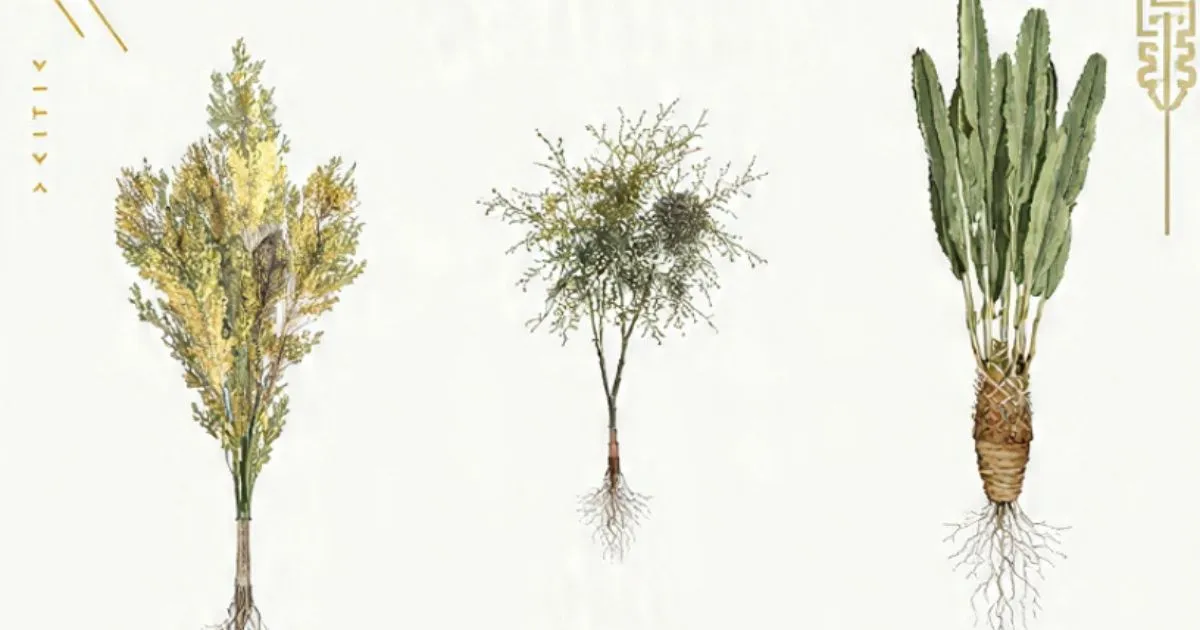
The Diversity of Native Plants in Saudi Arabia’s Eastern Province
Last Updated on September 7, 2026 by Mohammed Sifeddine
Table of Contents
The Diversity of Native Plants in Saudi Arabia’s Eastern Province
1. The Green Frontier: An Introduction
Native plants in Saudi Arabia’s Eastern Province are not merely surviving; they are thriving and form the cornerstone of one of the most ambitious environmental initiatives on the planet. The revelation by the National Greening Program that the region boasts over 61 distinct types of indigenous vegetation suitable for afforestation projects is a game-changer. This incredible biodiversity is the engine for Saudi Arabia’s groundbreaking efforts to expand its green cover, combat land degradation, and achieve the loftiest goals of the Saudi Green Initiative (SGI). This article is your comprehensive guide to understanding these botanical champions, the ecosystems they call home, and the national strategy turning vision into verdant reality.
2. Why Native Plants in Saudi Arabia’s Eastern Province Are Crucial
Forget generic saplings. The real heroes of sustainable greening are native species. Native plants in Saudi Arabia’s Eastern Province have evolved over millennia to withstand the region’s harsh climatic conditions—extreme heat, salinity, and aridity. This makes them inherently:
- Water-Efficient: They require significantly less irrigation than non-native species.
- Resilient: They are naturally pest-resistant and adapted to local soils.
- Ecosystem Supporters: They provide habitat and food for local wildlife, restoring natural ecological balances.
- Culturally Significant: Many species are deeply woven into the region’s heritage and traditional uses.
By focusing on these native species, the Kingdom ensures that every tree planted is a step toward lasting environmental sustainability, directly supporting the goals of Saudi Vision 2030 to enhance quality of life and protect the planet for future generations.
3. Exploring the Diverse Ecosystems of the Region
The resilience of native plants in Saudi Arabia’s Eastern Province is showcased by their adaptation to a stunning variety of landscapes. The National Greening Program identifies widespread growth across multiple environments:
- Coastal Areas (Sabkhas)
- Plateaus & Mountains
- Valleys & Meadows (Rawdats)
- Sand Dunes & Deserts (including the Rub’ al Khali and Al-Dahna)
- Saline Sand Deserts
- Depressions & Lowlands
- Cold Zones
This wide distribution is a testament to the adaptability of the region’s flora. While some species enjoy broad proliferation across these zones, others have more limited, niche habitats, together creating a complex and resilient botanical tapestry.
4. Spotlight on Key Native Species in the Eastern Province
Let’s move from theory to tangible examples. Here are some of the most prominent native plants in Saudi Arabia’s Eastern Province leading the greening charge:
Widely Distributed Powerhouses:
- Al-Sidr (Christ’s Thorn Jujube): A revered, drought-tolerant tree.
- Al-Rimth (White Saxaul): A critical desert stabilizer.
- Al-Arfaj (Rhanterium epapposum): The national flower of Kuwait, abundant in the region.
- Al-Ghada (Prosopis): A vital source of fodder and shade.
- Al-Atl (Tamarix): Excellent for saline soils.
Other Notable Species:
The list is extensive and ecologically rich, including Al-Ramth, Al-Shiran, Al-Hadh, Jalman, Talh, Al-Qataf, Al-Athab, Al-Tandhab, Al-Qirm, Al-Dimran, Al-Markh, Al-Qaysum, Al-Nagd, Al-Abythran, Al-Athir, Al-Shih, Al-Rukham, Al-As, Al-Gharqad, Al-Naqawi, Al-Dal, Jadr, Al-Awsaj, Abab, Al-Qasur, Jathjath, Ishhar, Wild Iris, Ja’dah, Al-‘Asabah, Al-Thamam, and Al-Humaydh.
5. Botanical Families: The Building Blocks of Biodiversity
This incredible variety is organized into major botanical families. Understanding these families helps experts select the right plant for the right environment. Key families represented among the native plants in Saudi Arabia’s Eastern Province include:
- Chenopodiaceae (Saltbush family)
- Fabaceae (Legume family)
- Acanthaceae
- Capparaceae
- Moraceae (Fig/Mulberry family)
- Rhamnaceae (Buckthorn family, home to Al-Sidr)
- Apocynaceae (Oleander family)
- Asteraceae (Daisy family)
- Zygophyllaceae (Caltrop family)
- Malvaceae (Mallow family)
- Peganaceae (Harmal family)
- Myrtaceae (Myrtle family, home to Al-As)
- Polygonaceae (Buckwheat family)
- Solanaceae (Nightshade family)
- Poaceae (Grass family)
These families encompass a full spectrum of life forms: towering perennial trees, large and small shrubs, and both annual and perennial herbs, offering a complete toolkit for ecosystem restoration.
6. The National Greening Program: Leading the Charge
The National Greening Program is the orchestrator of this botanical symphony. Its role extends far beyond planting trees. It is the national leader for afforestation projects and initiatives across all regions of the Kingdom. Its mandate includes:
- Driving Large-Scale Projects: Implementing strategic greening across diverse landscapes.
- Community Engagement: Fostering a culture of planting and environmental stewardship within society.
- Promoting Native Species: Educating on the paramount importance of using locally adapted native plants in Saudi Arabia’s Eastern Province and beyond.
- Achieving SGI Targets: Directly contributing to the Saudi Green Initiative’s goals of planting 10 billion trees and rehabilitating 40 million hectares of land.
This program represents the operational backbone of Saudi Arabia’s pledge to a sustainable, green future. For authoritative updates on their work, you can follow initiatives from the Kingdom of Saudi Arabia’s Ministry of Environment, Water and Agriculture.
7. How You Can Contribute to the Green Vision
The transformation is not solely a governmental endeavor. Sustainability requires collective action.
- Educate Yourself & Others: Share information about the importance of native plants in Saudi Arabia’s Eastern Province.
- Participate in Initiatives: Join local tree-planting campaigns organized by authorities or recognized community groups.
- Choose Native for Your Garden: If you landscape, prioritize native, drought-resistant species over water-thirsty exotic ones.
- Support Sustainable Practices: Advocate for and practice water conservation in your daily life.
8. Conclusion: A Sustainable Legacy in Bloom
The revelation of over 61 native plants in Saudi Arabia’s Eastern Province is more than a botanical inventory; it is a blueprint for ecological resilience and a testament to nature’s inherent strength. Through the science-driven strategy of the National Greening Program, these indigenous species are being deployed not just as plants, but as vital tools to secure a greener, healthier, and more sustainable future—fulfilling the promise of the Saudi Green Initiative and Vision 2030. The path forward is clear: by nurturing what is naturally ours, we are ensuring a thriving legacy for generations to come. The Eastern Province’s native flora is leading the way, showing that even in the most challenging environments, life finds a way to not just endure, but to flourish.
External DoFollow Links:
- For official details on the Saudi Green Initiative: The Saudi Green Initiative
- For botanical research and plant database: Royal Botanic Gardens, Kew – Plants of the World Online
Read More about Madinah on our Blog section
